
Is the Era of Selling Software Coming to an End?

For years, software products have been the tools we use to do our work more efficiently and more quickly.
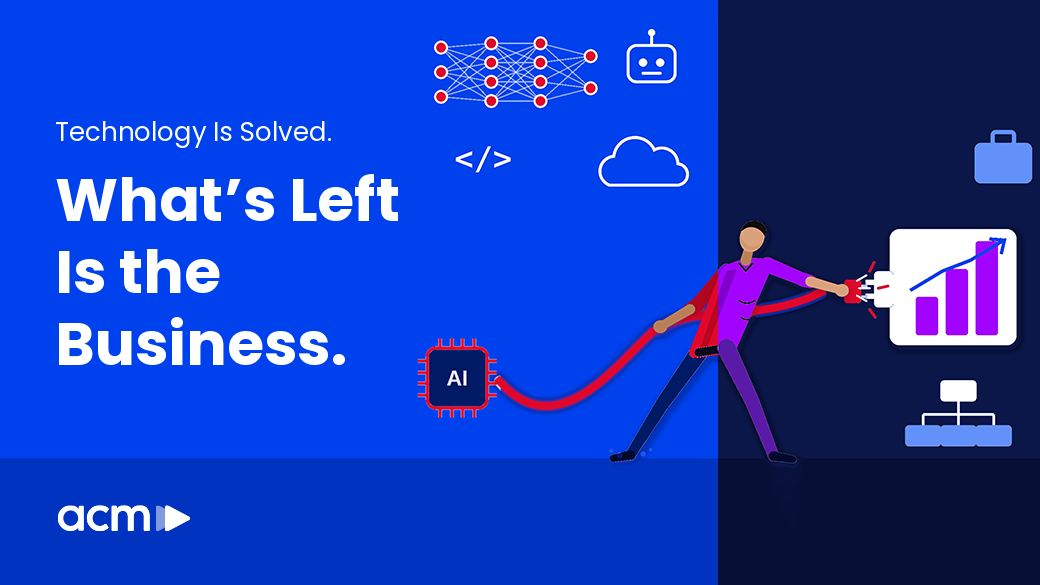
ERPs, CRMs, work management tools… All of them have become an important part of our daily working lives, but if you look closely, their role has always been similar: not to do the work, but to help us do it. Today, it feels like we’re on the threshold of a new era. Software is entering a phase where it no longer just acts as an intermediary but actually takes on part of the work. In a sense, you could say it’s time for software to roll up its sleeves too.
The first signals of this shift can be seen in a recent analysis published by Sequoia. The piece highlights an important trend: many new technology companies no longer sell software in the classic sense. They don’t sell a product license, and some may not even have a dashboard or a SaaS panel. Instead, they do the job directly.
One of the examples in the piece is Crosby.ai. Crosby doesn’t sell companies a contract management tool. Instead, it automatically carries out specific tasks that outside law firms would otherwise handle. In other words, the customer isn’t really buying software; they’re buying the outcome of a piece of legal work. Similarly, WithCoverage.com doesn’t sell companies a platform for managing insurance. It automates a significant part of the process the CFO runs with brokers. Once again, what’s offered is not a tool but the work itself.
Until now, software mostly didn’t do the work.
For many years, companies invested heavily in technology. ERP systems were deployed, CRMs were rolled out, and project management tools became part of our lives. But what most of these systems actually did was fairly limited. ERP didn’t do the accounting, and CRM didn’t do the selling. Project tools didn’t manage projects. These systems were infrastructure that helped people do their work. They made work more visible, kept data organized, and made processes easier to track, but people were still doing the work itself.
Looking at the new era that AI is ushering in, I think one observation from Sequoia’s piece deserves special emphasis: companies don’t actually budget for software; they budget for work. A company budgets for drafting contracts, for doing its accounting, for managing its insurance… If technology can do this work directly, then what the customer is buying isn’t software but the outcome of the work. And I think this way of thinking is a significant sign of the transformation.
But the real change isn’t in software.
Today, many companies use AI as a tool to boost individual productivity. We turn to AI for help with things like preparing presentations, writing emails, or completing code. This certainly delivers a meaningful efficiency gain, but as I see it, the real impact of this transformation isn’t on individual productivity. The real change will show up in how organizations work. Because AI’s true power isn’t in doing a person’s job a little faster; it’s in making it possible to redesign workflows.
Many workflows today are still designed for the old world. Data is collected in one place and sent to another, someone analyzes it, someone approves it, and the process moves forward. These flows are often fragmented across departments. As AI begins to take on certain cognitive tasks, redesigning these flows becomes possible. And this is exactly where a new idea of the organization emerges.
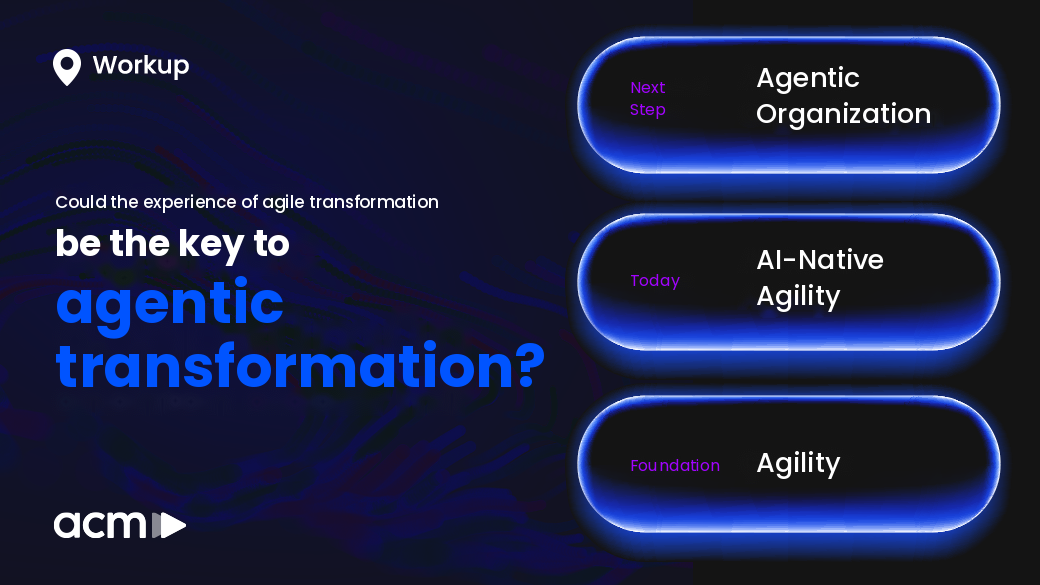
The Agentic Organization
What we call the Agentic Organization is a new organizational model in which people and AI systems work together. Here, AI is not a tool, but it isn’t an employee either. It’s better thought of as a mechanism operating within workflows. Some tasks are done by people. Some analyses are carried out by AI systems. Some decisions are accelerated by data. But the most important change is this: the speed of learning within the organization increases. Information circulates faster. Alternatives surface faster. Risks become visible earlier. The organization starts to function less like a machine and more like a learning system.
Agentic teams are the starting point of this transformation.
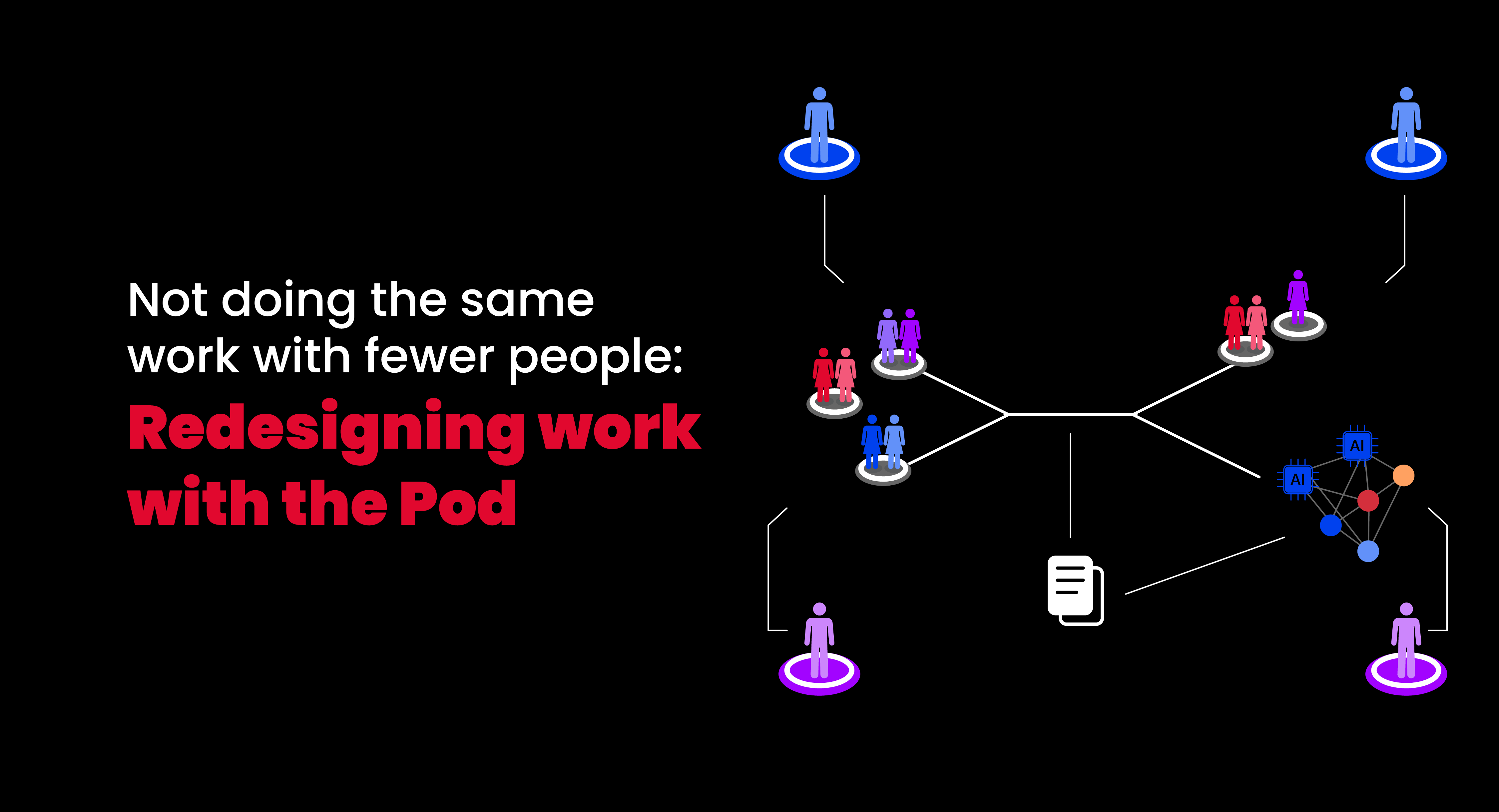
That’s why I wrote about agentic teams in my previous piece. This transformation usually doesn’t start by changing the org chart. More often, it starts with a change in how small teams work. Imagine a team that brings together people from different disciplines. Perspectives from R&D, production, marketing, and supply chain are all working on the same problem. But this time, some of the flows are accelerated by AI:
- Analyzing past experiments.
- Generating alternative solutions.
- Detecting risks early.
- Calculating cost impacts.
- Making regulatory constraints visible.
As a result, instead of being spent on searching for data or gathering documents, the team’s energy is directed toward the questions that really matter: What’s the best way to solve this problem? Which alternative makes more sense? Where should we take risks, and where should we stop?
Competition will now be between workflows.
I believe competition between companies will evolve to a different place in the coming years. Companies used to compete on their products. Then software began to compete. But today, more and more companies have access to the same technologies. In that case, what makes the difference won’t be the technology itself but how that technology is used within the organization. In other words, competition won’t be between products but between systems of getting work done. If a company can solve the same problem by learning faster than others, move forward with less trial and error, and circulate information faster within the organization, that’s where the real advantage will emerge.
The examples in Sequoia’s piece make me think that technology is increasingly evolving from selling software toward doing work. But I think the step after that will be even more interesting. Companies won’t just automate tasks; they’ll also redesign their organizations for this new world. In other words, the point isn’t just to build smarter software but to build smarter organizations. As I see it, this is exactly where the idea of the agentic organization becomes meaningful. We’ll probably be talking about this concept a lot more in the years ahead.

Comment(s)