01 / definition

What is a Progressive Organization?

Progressive organizations are built on the principles of self-management, wholeness and evolutionary purpose, rather than traditional hierarchical structures.

This approach reflects what Frederic Laloux describes as “Teal organizations” in Reinventing Organizations.

In these organizations:
  1. Decisions emerge from the people closest to the work, not from centralized authority

  2. Roles are dynamic and evolve according to organizational needs

  3. The organization continuously discovers its direction instead of rigidly following fixed plans

02 / method

How Is It Implemented?

  • Establishing Self-Management Structures

    Decision-making authority is distributed from hierarchy to the teams and individuals doing the work.

  • Making Roles Dynamic

    Instead of fixed job descriptions, roles evolve continuously according to organizational needs.

  • Transforming Decision-Making Mechanisms

    Through approaches such as the “advice process,” decisions are made with stakeholder input rather than centralized approval.

  • Building a Culture of Transparency and Trust

    An environment of trust is created through open access to information and strong feedback practices.

  • Aligning with an Evolutionary Purpose

    Rather than following fixed goals, the organization continuously discovers and adapts its direction based on changing conditions.

03 / roadmap

Implementation Roadmap

Transitioning to a Progressive Organization is not a “project,” but an evolutionary journey. A typical transformation includes the following steps:

  1. Awareness and Mindset Transformation

    Leadership teams and employees are introduced to the new organizational paradigm.

  2. Pilot Areas

    Self-management practices are tested within small teams before scaling further.

  3. Structural Transformation

    Roles are redefined. Hierarchical layers are reduced. Decision-making processes become distributed.

  4. Cultural Deepening

    A culture of trust, transparency, and continuous feedback is strengthened across the organization.

  5. Scaling

    Successful practices and ways of working are expanded throughout the organization.

04 / examples

Real-World Examples

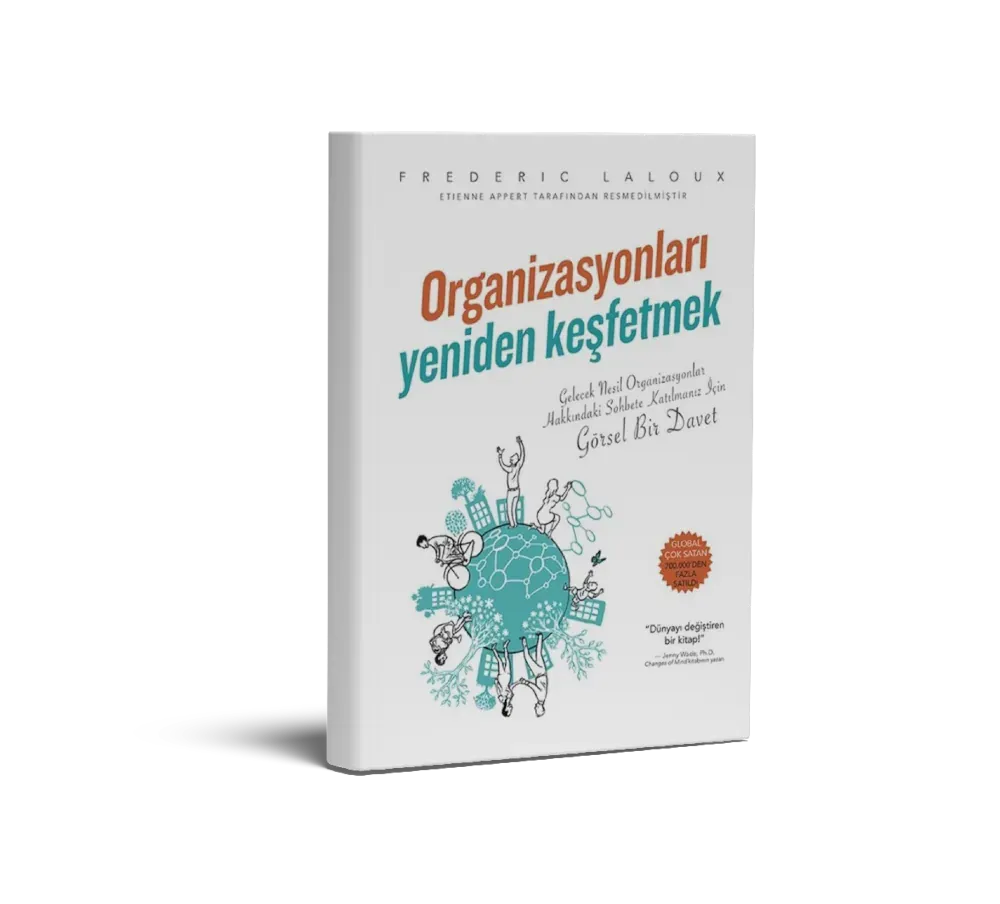
Reinventing Organizations explores the Progressive Organization approach not only as a theoretical framework, but also through detailed real-world case studies. The book demonstrates how organizations across different industries apply principles such as self-management, wholeness, and evolutionary purpose in practice. These examples show that transformation is not limited to large enterprises, but can also be adapted to organizations of different sizes and structures. The challenges, learnings, and breakthroughs experienced throughout these journeys are also openly shared. As a result, the book provides a powerful set of practical references for organizations seeking a more adaptive and human-centered operating model.

Cover of Frederic Laloux’s book Reinventing Organizations
05 / why

Why Progressive Organizations?

Traditional organizational structures are increasingly struggling to respond to today’s levels of speed, uncertainty, and complexity. As highlighted in Reinventing Organizations, more adaptive, human-centered, and self-managing systems are emerging as stronger models for both performance and meaning. Progressive organizations increase both speed and quality by reducing dependency on centralized decision-making. At the same time, they unlock human potential and create organizations that are more resilient, sustainable, and adaptable.

  • Faster and Better Decision-Making

    Decisions are made by the people closest to the work, eliminating unnecessary approval layers and improving both speed and quality.

  • Higher Employee Engagement and Ownership

    People become active contributors to decisions and outcomes rather than simply executing assigned tasks, increasing motivation and commitment.

  • Increased Innovation and Creativity

    Reduced hierarchy and stronger trust environments encourage experimentation, initiative, and the emergence of new ideas.

  • Greater Adaptability to Change

    By embracing an evolutionary approach instead of rigid plans, organizations can respond more effectively to changing conditions and uncertainty.

> contact

Get in touch

Ready to Rethink the Way Your Organization Operates? Is your organization truly reflecting its potential, or is it constrained by the limits of its current structure? Let’s design a faster, more adaptive, and more purpose-driven organization together.

Get in touch

Please do not write personal details such as a phone number or e-mail address.